
Hello! You may have found this because you’re like me and you find yourself walking on eggshells with other people for no good reason that you can discern.
I’ve done years of soul searching to try and work through my social anxiety. That has involved reading many books, therapy, and career coaches.
Here are a few books that I’ve found handy, along with summaries. I recommend buying from a small bookseller if you decide to purchase. The links on the books will take you to Bookshop.org.
TL;DR
- For improving communication skills and reframing the way you think about conversations: Nonviolent Communication.
- For understanding trauma’s impact and healing through body and mind: The Body Keeps the Score.
- For overcoming fears around asking for help and embracing vulnerability: The Art of Asking.
- For developing emotional resilience and facing fear in social situations: The Places That Scare You.



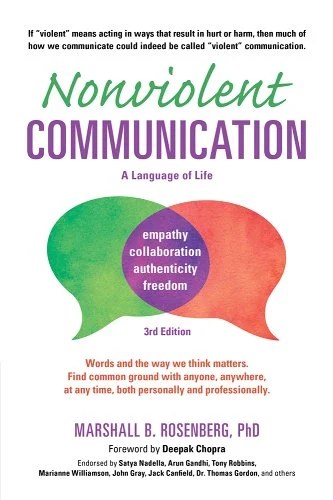
Nonviolent Communication
Nonviolent Communication: A Language of Life by Marshall B. Rosenberg is a powerful guide for improving communication and resolving conflicts with compassion and empathy. It provides a framework that can be incredibly helpful for people with social anxiety by teaching them how to express themselves honestly and listen to others in a way that reduces fear, misunderstandings, and conflict.
Key Insights for Social Anxiety from Nonviolent Communication:
1. Focus on Observations, Not Judgments:
- One of the core principles of Nonviolent Communication (NVC) is the distinction between observations (what we see or hear) and judgments (interpretations of those observations). For example, if someone looks at you in a certain way, social anxiety can cause you to immediately interpret it as judgment or rejection.
- Social anxiety often arises from the fear that others are judging us negatively, even when that might not be the case. NVC helps people notice their automatic judgments and replace them with neutral observations. This can significantly reduce anxiety, as it encourages a more open-minded approach to interactions.
- Takeaway: When communicating, practice distinguishing what you observe from how you interpret others’ behaviors. This helps reduce anxiety by reminding you that there might not be any negative judgment behind the behavior you’re interpreting.
2. Identifying and Expressing Feelings:
- People with social anxiety often struggle to express their feelings or are afraid of expressing emotions because they fear negative reactions. NVC emphasizes that expressing feelings (e.g., “I feel anxious” or “I feel uncomfortable”) is crucial to clear communication and reduces the likelihood of misunderstandings.
- The practice of identifying and expressing feelings helps to normalize emotions, making it easier to accept them instead of avoiding or suppressing them. This can be particularly helpful in social anxiety, where avoiding discomfort is a common strategy.
- Takeaway: Use NVC’s focus on feelings to express what you are experiencing in a non-judgmental way. This can help normalize vulnerability in social situations and make communication feel safer.
3. Understanding Needs:
- At the core of NVC is the understanding that all behaviors (including social anxiety behaviors) are driven by unmet needs. Social anxiety can arise when a person feels that their need for safety, connection, or acceptance isn’t being met in social situations.
- NVC encourages individuals to identify the needs behind their feelings and to communicate those needs clearly. For example, if you feel anxious in a meeting, it might be because you need clarity or reassurance.
- Takeaway: NVC can help you identify your core needs (e.g., for connection, understanding, safety) and express them without fear of rejection, which can reduce anxiety about interacting with others. It also helps you feel more empowered to ask for what you need, which can lessen feelings of helplessness or fear in social situations.
4. Requesting, Not Demanding:
- A major principle of NVC is that requests should be specific and made from a place of wanting connection, not from a place of demanding or controlling. People with social anxiety often fear that their needs will be seen as burdensome or unreasonable, and this fear can lead to avoidance of asking for what they need.
- NVC teaches that requests (rather than demands) allow space for others to willingly contribute to meeting your needs. For example, instead of saying “You must listen to me,” a request might be, “Would you be willing to listen to me for a moment?”
- Takeaway: The NVC framework can help individuals with social anxiety to make requests in a non-threatening way, helping them feel more confident in expressing their desires without fear of being rejected or criticized.
5. Empathy and Active Listening:
- Social anxiety often stems from a fear of being misunderstood or not accepted. One of the most powerful techniques in NVC is active listening—listening to others without judgment and reflecting back what you hear to ensure understanding. This can help you feel more connected and present in interactions, and less fearful of being judged.
- Active listening involves empathizing with the other person’s feelings and needs. When you practice empathizing, you reduce the anxiety that comes from worrying about what the other person might think of you, and instead, focus on understanding them.
- Takeaway: When you actively listen with empathy, it creates a safe space in the conversation and reduces the tension caused by fear of judgment, which is often at the core of social anxiety.
6. Dealing with Conflict in a Compassionate Way:
- People with social anxiety often avoid conflict due to fear of escalation or rejection. NVC shows that conflict doesn’t have to be scary or threatening. It can be a chance to understand both your own and the other person’s needs.
- By approaching conflict with a mindset of connection (rather than defending or avoiding), you can engage in difficult conversations with less fear. NVC teaches how to navigate these conversations in a way that is non-threatening and fosters mutual respect.
- Takeaway: By learning to view conflict through the lens of needs and understanding, you can engage in difficult conversations without fearing that they will lead to emotional overwhelm, rejection, or complete disconnection.
7. Reframing Negative Self-Talk:
- People with social anxiety often experience negative self-talk, where they anticipate failure, rejection, or judgment in social situations. NVC encourages self-compassion and the reframing of negative self-judgments. For example, instead of saying “I’m bad at talking to people,” you might recognize “I feel nervous because I have a need for connection and reassurance.”
- This reframing can help reduce internal criticism and replace it with self-acceptance, which is key in overcoming anxiety and fear.
- Takeaway: NVC helps you reframe negative self-talk by focusing on your needs and feelings, leading to a healthier, more compassionate view of yourself and your interactions with others.
8. Encouraging Emotional Openness:
- NVC promotes the idea that emotions are natural and valuable signals, not something to be avoided or feared. For someone with social anxiety, learning to be emotionally open can be empowering. Instead of fearing that expressing your feelings will lead to rejection, NVC teaches that sharing feelings openly fosters connection and understanding.
- Takeaway: NVC encourages emotional openness in a way that feels safe and non-threatening, helping individuals with social anxiety to feel more at ease in expressing themselves and seeking connection.
Nonviolent Communication offers a rich toolkit for people with social anxiety, focusing on how to express needs and feelings without fear of rejection or judgment. By shifting from reactive, fearful communication to a more mindful and empathetic approach, NVC helps reduce the anxiety associated with social interactions. The book’s emphasis on observations, feelings, needs, and requests allows individuals to engage in conversations with a sense of safety and connection. Additionally, NVC’s focus on active listening and empathy provides the foundation for meaningful, non-judgmental interactions that ease the fear of misunderstanding or conflict, making it an invaluable resource for those dealing with social anxiety.
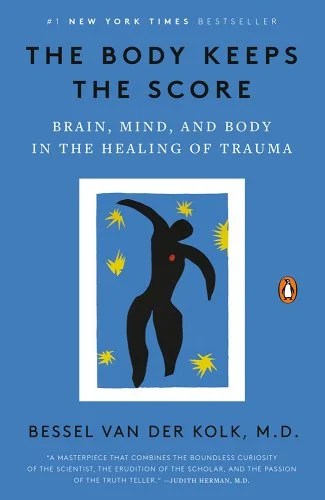
The Body Keeps the Score
The Body Keeps the Score: Brain, Mind, and Body in the Healing of Trauma by Bessel van der Kolk is a comprehensive exploration of trauma, its effects on the brain and body, and innovative treatments for trauma recovery. Although the book addresses a wide range of trauma-related conditions, its insights can be incredibly useful for people with social anxiety because it delves into how trauma—especially early-life trauma—can affect emotional regulation, the ability to trust others, and the perception of safety in social situations.

Key Insights for Social Anxiety from The Body Keeps the Score:
1. Understanding the Impact of Trauma on the Brain and Body:
- Van der Kolk explains how trauma, particularly early-life trauma, affects the brain’s ability to regulate emotions. The amygdala (the part of the brain responsible for detecting danger) becomes hyperactive in trauma survivors, often triggering excessive anxiety responses in situations that are not truly dangerous.
- For people with social anxiety, this means that social situations—especially those involving judgment or perceived criticism—can trigger an exaggerated stress response. The body “remembers” the fear from past experiences (e.g., rejection, humiliation, or abandonment), causing a heightened sensitivity to these triggers in the present.
- Takeaway: Understanding that your brain and body are reacting to past trauma, not necessarily present danger, can help you make sense of intense feelings of fear or discomfort in social settings.
2. Trauma and the Nervous System:
- Trauma can lead to a dysregulated nervous system, where the body remains in a state of chronic hyperarousal (fight-or-flight) or shutdown (freeze). In social anxiety, this means that even mild stressors (like a conversation or being in a group) may feel overwhelming, leading to physical symptoms such as a racing heart, sweating, or a sense of being “frozen” or unable to speak.
- The book outlines how trauma survivors often experience difficulty calming their nervous system and returning to a state of emotional regulation, which is key to social anxiety recovery. Many people with social anxiety feel trapped in fight-or-flight mode, where their anxiety can feel out of proportion to the situation.
- Takeaway: Van der Kolk’s explanation of how trauma affects the nervous system helps people with social anxiety understand why their reactions feel so intense. Healing requires learning to self-soothe and regulate emotional responses.
3. The Importance of Feeling Safe:
- For trauma survivors, feeling safe in their bodies and environments is crucial to recovery. Social anxiety often arises from the fear of being judged or rejected, which can feel unsafe. Van der Kolk argues that creating a sense of safety in one’s own body and in relationships is essential for healing.
- He suggests that social anxiety may stem from a lack of trust—either in oneself or in others—due to past traumatic experiences. This can lead to avoidance of social situations to prevent the emotional pain of perceived rejection or failure.
- Takeaway: Healing from social anxiety involves rebuilding trust in others and in yourself, starting with small steps and gradually confronting situations where you can practice feeling safe and supported.
4. Somatic Therapies and Mindfulness:
- One of the most important contributions of The Body Keeps the Score is its discussion of somatic therapies, which focus on reconnecting the mind and body. Trauma often results in dissociation (feeling detached from one’s body or emotions), which can manifest as avoidance behaviors—common in social anxiety.
- Techniques like yoga, mindfulness, and breathwork can help people with social anxiety ground themselves in their bodies, reducing the physical symptoms of anxiety and increasing their sense of presence in the moment. By engaging in body-focused therapy, individuals can work on releasing tension, building body awareness, and calming the mind.
- Takeaway: Somatic therapies like yoga and mindfulness can be incredibly beneficial for social anxiety, as they help to regulate the nervous system and reestablish a connection with the present moment, reducing the fear response.
5. Cognitive Behavioral Techniques and EMDR:
- Van der Kolk discusses EMDR (Eye Movement Desensitization and Reprocessing), a therapeutic technique that helps trauma survivors process distressing memories and reframe negative beliefs. This can be helpful for social anxiety if past experiences of social rejection or criticism are contributing to current fears.
- Social anxiety often involves negative self-talk and a deep-seated belief that one is inadequate or unworthy of connection. EMDR can help individuals process these beliefs and develop a more positive self-image.
- Takeaway: EMDR or cognitive-behavioral techniques (CBT) can help challenge the core beliefs that fuel social anxiety, such as the fear of judgment or rejection, and replace them with more balanced and realistic thoughts.
6. Social Support and Rebuilding Connection:
- Van der Kolk emphasizes that healing is best done in a supportive environment. Trauma survivors who feel isolated or disconnected may struggle with social anxiety, as they might not trust others or fear being misunderstood.
- A key part of overcoming social anxiety involves gradually rebuilding trust with others and engaging in healthy, supportive relationships. This can help people with social anxiety realize that most people are not reactive or judgmental, which reduces the fear of rejection.
- Takeaway: Social support—whether through therapy, support groups, or trusted friends—can help people with social anxiety realize that they are not alone and that most people are not as critical as they fear.
The Body Keeps the Score offers a deep, body-centered understanding of how trauma manifests in social anxiety. It explains the biological and psychological mechanisms behind anxiety responses, which can help people with social anxiety understand that their fears are not necessarily grounded in reality but in past trauma. By applying body-based therapies, mindfulness, and gradual exposure to social situations, individuals can reframe their fears and develop a sense of safety in social interactions. The book also encourages rebuilding trust in others and emphasizes the importance of support networks, both of which are crucial for overcoming social anxiety and building confidence in social settings.
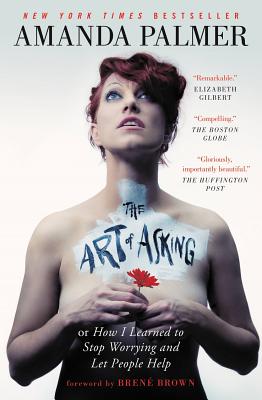
The Art of Asking
The Art of Asking: Or How I Learned to Stop Worrying and Let People Help by Amanda Palmer is a memoir that explores the concept of asking for help and the vulnerability involved in accepting support from others. For people with social anxiety, the book offers valuable insights on overcoming the discomfort of asking for what you need, learning to embrace vulnerability in social interactions, and accepting that people are generally willing to support you.
Key Insights for Social Anxiety from The Art of Asking:
1. The Power of Vulnerability:
- One of the central themes in The Art of Asking is the power of vulnerability and how asking for help can create deep connections with others. People with social anxiety often fear asking for help, worried that they will appear weak or burdensome. Palmer shares her own journey of learning that vulnerability is not a weakness, but a way to connect with others.
- Social anxiety often arises from the belief that asking for help will lead to rejection or judgment. This book teaches that vulnerability is actually a source of strength, and that people are more likely to connect with you when you’re honest about your needs and open to receiving help.
- Takeaway: For someone with social anxiety, The Art of Asking encourages reframing asking for help as an opportunity for connection, rather than something to fear. It highlights that accepting help allows for mutual exchange, making relationships more authentic.
2. Redefining Asking as an Exchange, Not a Burden:
- Social anxiety often involves the belief that asking for help makes you a burden to others. Palmer challenges this idea by illustrating that asking is part of a larger exchange that benefits everyone. By asking for support, you allow others the opportunity to give and feel valued, which creates a reciprocal relationship.
- For someone with social anxiety, this perspective is liberating because it shifts the narrative from “I’m imposing” to “I’m offering someone the chance to be part of a meaningful exchange.”
- Takeaway: Reframing asking for help as a mutual exchange rather than a one-sided request can alleviate the fear of being a burden and help reduce anxiety about reaching out to others.
3. The Fear of Rejection and How to Overcome It:
- One of the major challenges for people with social anxiety is the fear of rejection when asking for help or making a request. Palmer writes openly about her own fears of rejection, whether in her professional life as a musician or in her personal relationships. She emphasizes that rejection is not a reflection of your worth, but just a part of life.
- She encourages readers to approach rejection with the understanding that it’s a normal and temporary part of human interaction. Rejection doesn’t define you, and it doesn’t mean that you’re unworthy of help or connection.
- Takeaway: The Art of Asking helps people with social anxiety normalize rejection as a natural part of life and encourages them to keep asking and reaching out for support without the fear that a “no” is a personal failure.
4. Building Trust with Others:
- Palmer emphasizes that asking for help is an essential part of building trust in relationships. While social anxiety can make it difficult to trust others, The Art of Asking illustrates that trusting others and being open to receiving support is an act of courage that can deepen connections.
- The book shows that trust is earned through vulnerability and that being open to receiving help can strengthen bonds between you and others. By allowing others to assist you, you also give them the opportunity to show their trust in you.
- Takeaway: The Art of Asking teaches that asking for help and being vulnerable is an important step in building trust in relationships, and can ease anxiety by reinforcing that mutual trust is the foundation of meaningful connections.
5. The Importance of Community and Support:
- Palmer explores the idea of community and how asking for help creates a sense of belonging. For people with social anxiety, there’s often a fear of not being accepted or that reaching out will isolate them further. However, Palmer shows how seeking help can actually strengthen ties within your community, whether personal or professional.
- The Art of Asking encourages readers to create a community where they give and receive help, offering an alternative to isolation. Social anxiety often stems from feelings of loneliness or fear of rejection, and the book shows that community is built on interdependence rather than independence.
- Takeaway: Asking for help is not just about getting what you need—it’s about creating a sense of shared responsibility and belonging within a community. Learning to reach out helps reduce feelings of loneliness and isolation that are common in social anxiety.
6. Letting Go of Perfectionism:
- Social anxiety is often accompanied by perfectionism, where you feel that you have to be perfect in social interactions or meet certain expectations in order to be accepted. Palmer writes about letting go of the need to be perfect and embracing imperfection as part of the human experience.
- By accepting that you don’t have to have everything together and that asking for help is a natural part of life, you can ease the pressure of trying to always appear “perfect” or self-sufficient. This can relieve a lot of the anxiety tied to social interactions, where the fear of being judged or criticized often stems from trying to maintain an image of perfection.
- Takeaway: The Art of Asking encourages readers to embrace imperfection and to accept that asking for help is part of being human. This shift can help alleviate anxiety by allowing you to feel more comfortable in social situations without the pressure of needing to be flawless.
7. Creating a Culture of Giving and Receiving:
- A significant part of Palmer’s philosophy is creating a culture of reciprocity—a society where giving and receiving are equally valued. For someone with social anxiety, this can be a game-changer. You may worry that receiving help makes you weak or that you’ll be indebted to others, but Palmer demonstrates how mutual aid strengthens everyone involved.
- She advocates for embracing both giving and receiving as a way of creating a supportive and compassionate community. This perspective can reduce anxiety by helping you feel like you don’t have to do everything on your own or live up to an ideal of self-sufficiency.
- Takeaway: The book teaches that giving and receiving help is natural and essential for healthy relationships and communities, which can reduce the anxiety of always feeling like you need to handle things alone.
The Art of Asking is a powerful resource for people with social anxiety, particularly those who struggle with the fear of asking for help or appearing vulnerable. By highlighting the importance of vulnerability, trust, and community, Amanda Palmer encourages readers to reframe asking for help as a strength rather than a weakness. The book provides a shift in perspective that makes it easier for those with social anxiety to engage with others, embrace imperfections, and reduce the fear of rejection. It also emphasizes the mutual benefits of receiving and giving help, which can foster deeper and more authentic connections. Through her journey, Palmer shows that asking for help can be a profound act of connection and empowerment, which is essential for overcoming social anxiety.
The Places That Scare You
The Places That Scare You: A Guide to Fearlessness in Difficult Times by Pema Chödrön is a spiritual guide that delves into the concept of fearlessness and how to embrace vulnerability and openness, especially in moments of emotional discomfort. Pema Chödrön, a Tibetan Buddhist nun, offers wisdom on how to work with fear, anxiety, and difficult emotions. For people with social anxiety, this book is particularly useful because it provides tools for navigating fear in relationships, social interactions, and other anxiety-provoking situations, while promoting a mindset of acceptance and compassion.

Key Insights for Social Anxiety from The Places That Scare You:
1. Understanding Fear and Embracing Vulnerability
- One of the central messages of the book is that fear is natural and should not be avoided. For those with social anxiety, this is a powerful reminder that fear itself is not a problem, but the way we react to fear can become problematic. Chödrön encourages readers to confront their fears rather than flee from them.
- Social anxiety often involves the fear of being judged, rejected, or making a mistake in social situations. The book teaches that being vulnerable and accepting fear as part of the human experience can transform how we relate to others.
- Takeaway: Social anxiety can stem from an avoidance of uncomfortable feelings, but The Places That Scare You teaches that embracing vulnerability and fear can soften the intensity of those emotions and reduce the need to control or avoid situations that feel risky.
2. Mindfulness and Present-Moment Awareness
- Chödrön emphasizes the importance of mindfulness in navigating fear and anxiety. Mindfulness helps you stay grounded in the present moment, instead of getting lost in what-ifs or imagined future scenarios, which often fuel social anxiety.
- People with social anxiety often worry about how they will be perceived or what might happen in social situations. Mindfulness practices taught in the book focus on being fully present, allowing you to engage with others without being overwhelmed by fear of judgment or rejection.
- Takeaway: The book suggests using mindfulness to reduce the constant cycle of negative thoughts and worries that accompany social anxiety. By returning to the present moment, you can calm your nervous system and approach interactions with greater ease and openness.
3. The Power of Compassion and Self-Compassion
- One of the most important aspects of Chödrön’s teachings is the cultivation of compassion for yourself and others. She emphasizes that self-compassion is essential when facing fear, as being kind to yourself helps you let go of perfectionism and self-criticism, which are often at the heart of social anxiety.
- Social anxiety often involves harsh self-judgment. People with social anxiety may fear saying the wrong thing or acting in a way that others will find unacceptable. Chödrön encourages readers to develop self-compassion and see their fear as part of their human experience rather than something to be ashamed of.
- Takeaway: Practicing self-compassion allows you to be kinder to yourself when anxiety arises, which in turn makes it easier to be present with others without self-criticism. This approach can also encourage more compassionate interactions, which are less likely to trigger anxiety.
4. The Practice of Tonglen: Taking and Sending
- Tonglen is a meditation practice that involves taking on the suffering of others and sending out relief and healing. For those with social anxiety, this practice can be transformative because it shifts the focus away from self-judgment and places it on connection with others.
- In social situations, people with anxiety often feel self-conscious or preoccupied with their own discomfort. The practice of tonglen helps shift this focus, allowing you to feel more connected to others by acknowledging their struggles as well as your own.
- Takeaway: Practicing tonglen can soften the grip of social anxiety by redirecting the focus from your own fear to a sense of collective empathy, making social interactions feel less isolating.
5. Letting Go of the Need for Control
- The Places That Scare You teaches that control is an illusion and that trying to control outcomes, especially in social situations, only increases anxiety. People with social anxiety often feel the need to control their interactions, fearing they will say or do something wrong. Chödrön encourages a more relaxed approach, where we can let go of the need to control how others perceive us.
- The practice of letting go allows us to approach social situations with acceptance, trusting that we do not need to manage every aspect of an interaction.
- Takeaway: The book encourages letting go of perfectionism and control, which can reduce anxiety and open up the possibility of authentic, relaxed interactions.
6. Dealing with Emotional Triggers
- Social anxiety often arises from past experiences or unresolved emotional wounds. Chödrön addresses how to work with emotional triggers—those strong reactions to certain situations or people—without being consumed by them. The book offers tools for breaking free from the habitual patterns of reactivity.
- Social anxiety can be triggered by specific words, looks, or situations that remind you of past experiences of rejection or judgment. Chödrön teaches that recognizing these triggers without attaching to them can help you regain control and respond from a place of awareness and compassion.
- Takeaway: The Places That Scare You helps you build emotional resilience by teaching you how to recognize and sit with triggers, allowing them to pass without becoming overwhelmed by fear or shame.
7. Creating a Strong Inner Foundation
- Chödrön advocates for cultivating an inner foundation of equanimity and balance, which allows you to weather emotional storms without being shaken by external circumstances. Social anxiety often stems from the fear that external judgment will destabilize you, but by strengthening your internal sense of self, you can handle social situations with more calm and confidence.
- Takeaway: Building a strong inner foundation helps you stand firm in social situations, reducing anxiety because you are less dependent on how others respond. This helps you accept the ebb and flow of relationships without feeling overwhelmed by external validation or rejection.
8. The Importance of Embracing Impermanence
- Another key teaching in the book is the concept of impermanence, or the understanding that everything—including difficult emotions—changes. Social anxiety often leads to a fear that anxiety will be permanent or that uncomfortable feelings will never pass.
- Chödrön reminds readers that feelings of fear or discomfort are temporary and will pass with time. By embracing impermanence, you can approach social situations knowing that anxiety is transient, and it does not define you or the interaction.
- Takeaway: Embracing the impermanence of feelings can help alleviate anxiety because you learn that social discomfort or fear doesn’t last forever, allowing you to move through anxiety-provoking situations more easily.
The Places That Scare You offers a wealth of insights for people with social anxiety by teaching how to approach fear, vulnerability, and discomfort with a sense of compassion, mindfulness, and acceptance. Chödrön’s teachings encourage readers to embrace fear as a natural part of life, and provide tools for reducing the intensity of anxiety through practices like mindfulness, self-compassion, and letting go of control. For those struggling with social anxiety, the book helps shift the narrative from avoidance and perfectionism to one of openness and connection, creating a more peaceful and confident approach to social situations.
Summary
- For improving communication skills and and reframing the way you think about conversations: Nonviolent Communication.
- For understanding trauma’s impact and healing through body and mind: The Body Keeps the Score.
- For overcoming fears around asking for help and embracing vulnerability: The Art of Asking.
- For developing emotional resilience and facing fear in social situations: The Places That Scare You.
 Em Nouveau